Euphoria Season 3, Episode 1: “Andale”
*includes spoilers
I’m not sure where to begin here. Maybe this is due to the fact that season 3 of Euphoria didn’t really begin all too clearly, in the first place. I have a lot to say but for the sake of clarity, let’s take it one step at a time: episode by episode.
Euphoria: Season 3, Ep. 1: “Andale”
I supposed we can start at the beginning: in the middle of nowhere.
Season 3 of Euphoria, created by Sam Levinson, picks up with a cinematically stylized rearview mirror shot of Rue (Zendaya) in the desert, somewhere along the Mexican/ U.S border (Chihuahua, to be exact). We quickly learn that, while she’s not actively on drugs, she’s also she’s also not up to “anything good,” as she directly tells us in her iconic voiceovers.
The series of events that unfold in season 3 take place about five years after the end of season 2, where a collection of new and returning characters are seen navigating the beginning stages of their young adult lives.
A Western Aesthetic
Euphoria’s season 3, episode 1 offers a collection of cinematic visuals, in combination with retro designs that seemingly point to an old-fashioned western aesthetic. At first, this felt confusing, bizarrely random and severely tone deaf but after giving the first episode another watch, it makes (a little) more sense.
Let’s talk about it a little more.
The border: setting the scene
As a whole, Euphoria primarily hits on themes surrounding addiction, substance abuse and the toxicity that comes with the use of illegal substances.
For the sake of entertainment and the continuation of a storyline, it makes sense that most of these characters find themselves in regions close to the U.S/Mexican border. While season 3, episode 1 takes place in different settings (like suburban towns in Southern California and Hollywood sets in Los Angeles), it also features traditionally deserted landscapes along the U.S/Mexican border (where a lot of cartel drug crimes tend to happen in the first place). Therefore, it makes sense that Rue (in particular), finds herself here at the start of the third season. These desert-like landscapes reappear throughout the episode (and the season), in moments where we witness drug deals and things of the sort.
While I’m sure most of us would have liked to see Rue working at a nursing home or feeding underserved kids in Tijuana, or heck, making generally better life choices altogether, the show wouldn’t have made sense under these wholesome pretenses. For the sake of narrative continuity and dare I say: entertainment, the show needs to maintain a certain trajectory and unfortunately, that trajectory comes at the cost of these characters and their devastating life circumstances.
An homage to the 1970s
This sort of western, old-fashioned aesthetic is also present in moments and settings outside of these desert-like landscapes, possibly hinting at a whole new meaning. In particular, we see a lot of parallels to the 1970’s, not only when it comes to creative choices, but thematic ones as well. Let’s talk about both.
Creative: a 1970s look
Aesthetically speaking, there are many instances where the creative direction behind this season hints at a certain time period. We see it in the architectural layout of Cassie and Nate’s suburban mansion, the choices behind their interior design and Lexi’s 1970s inspired apartment, accessorized to the brim with retro décor, like Mediterranean kitchen tiles, bright colors (particularly yellows, greens and oranges), bulky patterns, accented designs and even a vintage style loveseat sofa.
We see this aesthetic pattern throughout, especially in the creative direction behind wardrobe too. In this first episode, Lexi is seen wearing outfits that resemble a vintage style, with wardrobe pieces like bellbottom-style trousers (with a multi colored square pattern), a colorful sweatshirt paired with a collared shirt underneath and bulky patterned blouses. While other characters might be seen wearing similar textures and patterns on a more subtle basis, these 1970s inspired outfits and wardrobe pieces are still present, nonetheless. We see it in different scenes featuring textured and low-cut shirts, baggy blouses, big lens sunglasses, vintage styled jean jackets and cowboy hats.
Thematic: a 1970s tribute
So, what does this all mean? I think there’s a lot to be said about the aesthetic choices in season 3, most of which seem to mirror an older time period. This is not a coincidence, however. These choices are strategic and could possibly serve to accentuate the thematic undertones that also mirror the same time period, as well.
There are certain topics that seem to pay tribute to the social construct in the 1970’s with themes like rebellion, particularly relating to young adults, gender roles as well as women rights and feminism. We see this in moments where Cassie rebels against Nate (in an effort to defend her vocational lifestyle), in moments where Cassie and Nate’s relationship exposes friction due to their gender role disparities and misaligned expectations, and in every moment that highlights female empowerment, particularly in the work space.
While the following scenes highlight darker circumstances and controversial moments, they are empowering nonetheless because these characters (whether they be good decisions or bad ones) are making their own decisions in the first place. We see this play out in moments where Lexie takes control and makes directorial suggestions on-set, moments where Maddie shows leadership in her managerial position, and in moments where Rue manages the girls at the Silver Stripper, an exotic night club in Los Angeles, reinforcing once again the power behind women’s rights and female authority.
Characters
We are five years out of high school and Rue finds herself in a hole… a deep one that puts her in $100,000 worth of debt. Laurie (played by Martha Kelly) returns as Rue’s iconic drug dealer and lures her back into a dark life full of drugs and bad decisions. In a desperate attempt to make money, Rue becomes a drug mule, sneaking illegal substances across the border. In an iconic and explicitly graphic scene, we see how fentanyl is sneaked into the U.S: by “bodypacking” or swallowing fentanyl-filled balloons and swallowing them… with the help of K.Y Lubricant, of course.
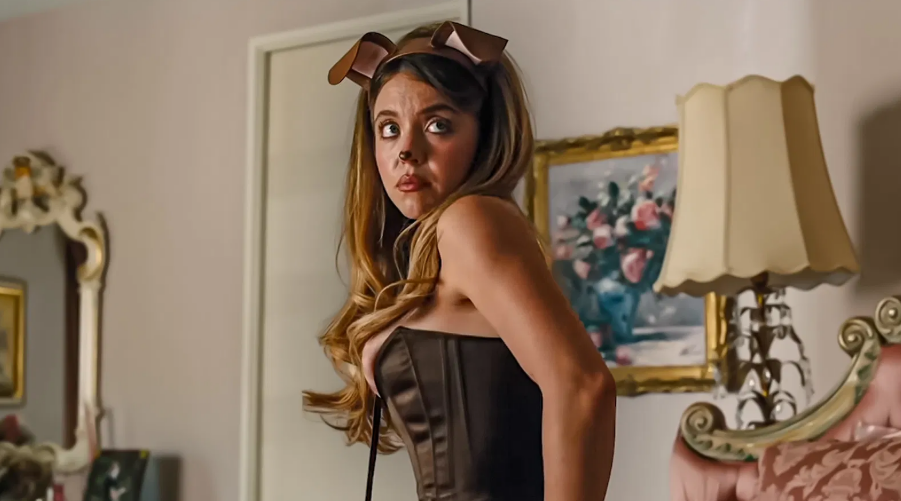
Cassie (Sydney Sweeney) & Nate (Jacob Elordi) are still together. Engaged, actually. They live in a big mansion, somewhere in the suburbs of Southern California. Cassie’s opening scene is on brand with her character: overly sexualized and revealing. We first see her on screen impersonating a sexy puppy, panting with her tongue out and wagging her “tail.” For the record, she’s trying to become “TikTok famous” and get monetized for her online content. Nate on the other hand, seems like a completely different person, seemingly healed from his drinking and his pending anger issues. He has now taken over his father’s business. A quick reminder that he’s roughly 22, 23 years old. So… a 22-year-old taking over their father’s business? Yep, makes perfect sense to me (note the sarcasm).
Cassie and Nate’s relationship is the same way it’s always been: toxic and unhealthy. The only difference here, is a newly introduced topic to fight about: financial issues.
Lexi (Maude Apatow) is working in Hollywood. Maddie (Alexa Demie) is working in talent management. Throughout the course of this episode, we are also introduced to a new character: Alamo Brown, played by Adewale Akinnuoye-Agbaje. He owns the Silver Stripper and oversees Rue… but who really is Alamo Brown and how much can we really trust him?
A Theatrical Representation of Young Adulthood
Season 3, episode 1 of Euphoria executes a vastly theatrical (and un-realistic) representation of what young adulthood looks like, in America today. This season starts with an over-the-top version of what post-high school life (typically) looks like for most teenagers and young adults.
This season seems to point at the type of season you’ll either love or you’ll hate… touching base on other important themes like sexuality and reinvention. All of these characters (both new and returning) seem to emulate a strong desire to reinvent themselves and start all over… but can they really escape their pasts?
In true Euphoria fashion, the third season kicks off with an intensely exaggerated aesthetic, a bizarre collection of graphic scenes and an over-the-top portrayal of human existence. You can now stream it on HBO Max.