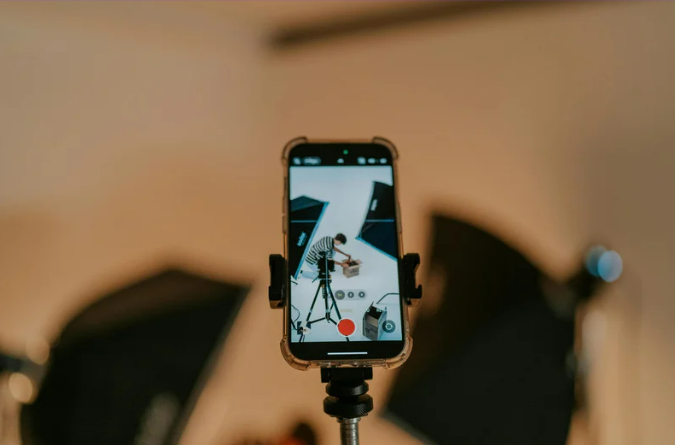
Your Guide to Self-Tape Auditions
While self-tape auditions have always been around, their popularity intensified during the COVID-19 Pandemic, when social distancing took center stage and limited physical interactions everywhere.
What is a Self-Tape?
A self-tape audition, like the name suggests, is a self-recorded video that an actor films on their own time. These virtual-style auditions took off during the pandemic, offering actors, casting directors and entertainment professionals an alternative, one that limited physical interactions during a time where social distancing was highly encouraged in order to lower our risks of contagion.
While in-person auditions still exist today, self-tapes cover a large percentage of audition styles as it offers feasibility, in a fast-paced industry, one that oftentimes requires quick turn-arounds and fast replies.
Self-Tapes and In-Person Auditions
Self-tapes and in-person auditions are relatively similar in that most in-person auditions (for on-camera projects, at least) are also recorded on tape.
In the audition room, there’s usually a production or casting assistant standing behind a tripod and camcorder. The room is typically marked with a taped “X” on the floor, a few feet away from the camera. Whatever you were asked to prepare will be recorded alongside a slate (or short introduction).
What you say in your slate will ultimately depend on the casting assistant’s instructions. While it can vary, the most basic questions or topics to include are:
Name
Height
Location
Union status
For self-tapes, slates will be included in the initial instructions that are sent to you.
Slates are an opportunity to present yourself and showcase your personality, outside of the audition material. They are quick and to the point. Other slate additions might include questions like:
Tell us a little bit about yourself
What’s something unique about you?
Tell us a fun fact about yourself
Self-Tape Audition Tips
While self-tape auditions do require you to film, edit and upload everything on your own time, you don’t need to drive yourself crazy navigating this process.
I like to advocate for simple self-tape setups, ones that don’t require expensive equipment. At the end of the day, we are actors, not technicians or professional videographers. Yes, most actors WILL inevitably acquire these skill sets over time, but it’s also not a REQUIREMENT. So, don’t put too much pressure on yourself!
Like going to the gym
Think of your self-tape auditions like going to the gym: you’re there to meet a GOAL. Still, some people place a great deal of value on what they WEAR (to the gym) or how EXPENSIVE (their self-tape equipment is). To each their own.
Some people might splurge on lululemon leggings and adidas sneakers while others might not care enough to spend so much money on what they wear. Personally speaking, when I did go to the gym (not anymore), I remember wearing converse and day-day tank tops or t-shirts. I didn’t go out of my way to purchase outfits FOR the gym. Instead, I just made do with what I had mostly because I didn’t place so much value on spending money on fitness attire, in the first place.
This is all to say that, like going to the gym, your audition goal should be to get that self-tape in. HOW you choose to film it or HOW you choose to show up is up to you… it could be with the most expensive film equipment and recording studio or the most basic Walmart tripod.
Will better equipment make for a better-quality self-tape? Sure… the same way that a more expensive pair of leggings might look better than some old sweats from home. But, let me ask you this: will those things change the trajectory of your objective? Not really.
In my opinion, the actor who is right for the job will get the part, just the same way that the person who prioritizes their health will get the most benefits from going to the gym.
Having the most expensive equipment will make your video look great but ultimately, it doesn’t matter how many beautiful camcorders or light stands you own: if you’re not right for the role, you’re simply not right for it… and there’s no amount of high-quality equipment that can change how the acting business operates. Same thing with the gym: you can own the cutest outfits, but if you’re not motivated to work out and GO to the gym, it doesn’t matter how cute you look if you’re just going to stay home and do nothing to achieve your goals.
Self-Tape Must Haves
When it comes to self-tape equipment, the options are endless. Generally speaking, actors will benefit from having one or more of the following:
Your smartphone (to record)
A self-tape audition backdrop (to establish a blank canvas behind you. Check this one out from Amazon)
A ring light/tripod (to light your scene. Check this UBeesize one from Amazon). While ring lights or light stands are great to have, they’re also not necessary. Remember: your light can come from an artificial source (like a ring light) or a natural source (like a window). In which case, you’ll want to place your tripod or phone against the window sill. Sit or place yourself in front of it. Doing this will establish a natural stream of light. Quick tip: your light source should never come from behind you, as it will create a shadow. You always want the source of light to be in FRONT of you!
For seasoned actors or actors who are looking for a more professional self-tape kit, consider the following:
A professional camcorder (check these out: Canon EOS R50 and Sony ZV-1 II)
A professional recording kit including microphone, condenser and headphones (for voiceovers and podcasts. Check this one out: Focusrite Scarlett 2i2 Studio 4th Gen )
Soundproofing panels (for quieter rooms to record in. Check this one out from Focussound)
Editing software (to edit your self-tapes). In my opinion, this is really not necessary and you can easily get by with free versions of iMovie on your smartphone devices or other free editing software’s on your laptop. If you are looking to splurge however, you might consider paid software’s like Final Cut Pro or Adobe Premier.
How do Actors Film Auditions?
Now that we’ve talked about self-tapes and equipment, let’s discuss the intricacies of HOW an actor films their auditions.
Filming logistics
When it comes to the actual recording of your video you want to keep in mind the following:
Lighting – make sure your video is well-lit. Whether your self-tape is naturally or artificially lit doesn’t matter, as long as the viewer can see you!
Framing – this relates to everything in the shot itself (including you). Unless otherwise specified, you want to film in a de-cluttered space, against a blank wall. This is where those self-tape backdrops that we talked about earlier come in handy! Blue and green screens are most commonly used for auditions but grey and other neutrals work just as well.
Noise – avoid background noise of any kind. This gets tricky for those who live in cities or places with a lot of street noise. Don’t be surprised if you have to wait a few seconds for those sirens to subside!
Memorization – this is a non-negotiable. Being memorized is so important, as it shows dedication. Physically speaking, it brings your eyesight up, allowing casting directors to really asses your performance. Constantly looking down on a piece of paper will be a distraction and will limit your emotional ranges. Remember: a memorized actor is a memorable actor.
Reader – if you’re performing a scene, this will require a reader (a person to read the other lines). Having the other person physically with you is always the best option but I won’t lie, looping them in virtually (via Zoom) is a personal favorite of mine. It saves time and its easier for everyone involved.
Casting logistics
Additionally, you want to consider any casting specifications (or “specs”) that were sent to you in the original self-tape instructions. This can include anything from:
Character age & time period – this might impact what you choose to wear.
Framing – sometimes casting will ask you to record yourself in a certain close up or might request an additional clip of you, where they see your full body. In casting, we call this a full body shot. You can wear the same clothing all around.
Multiple takes – if casting asks for multiple takes of the SAME scene, make sure you make clear and DIFFERENT choices, each time!
Improv – if they ask, be ready to roll with the punches and improvise a scene or a moment.
Slate – a short introduction before your actual audition. Be yourself!
Hands – for projects involving the exposure of your hands (like commercials), casting will typically ask you to show them in your self-tape auditions. This means that actors should hold up both sides of their hands firmly for a few seconds. This is intended to show how your hands look on camera.
Another Opportunity to Perform
At the end of the day, a self-tape, like any audition, is another opportunity to perform. The key for any self-tape is to be prepared. Have your own self tape kit or must-have equipment that will facilitate your auditions, when they do come in. Make it easier for yourself by being a prepared actor. The rest will fall into place. Be yourself and break a leg!