4 Acting Techniques to Know
On the surface, acting seems like a pretty simple task: you say some lines… and you go home. But beneath its simple façade, its glamourous stereotypes and its (oftentimes) misunderstood artform, acting requires a skill that simply put: not everyone has.
Acting is the art ofportraying another person (character), on camera or on screen. In order to do so, actors need to acquire a certain skill, one that grants them the ability to replicate and realistically convey a variety of human emotions, typically found in the characters that they play in the first place.
Acting Training
Some actors get lucky. They happen to be in the “right place, at the right time” and their careers simply… take off, but regardless how your career starts or where it goes, you should always consider some sort of formal acting training.
Ultimately, where and who you choose to study with is a choice, one that’s highly dependent on your needs and your own personal style. Acting training can be found in different settings, including:
College (acting programs)
Acting conservatories
Local acting studios
Regional and local theaters that offer classes
One-on one coaching sessions
Acting Techniques
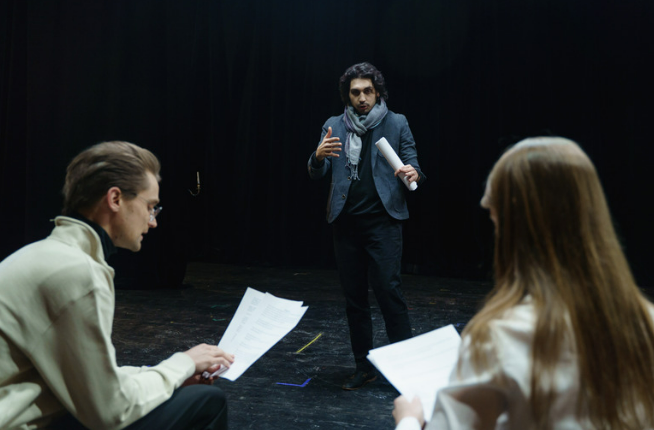
Acting teachers will typically implement a certain approach or acting technique, as a guiding practice for their students. These techniques range vastly in style, method and popularity.
For the sake of this blog post, we’ll focus on four of them.
Technique #1: Stanislavski
The Stanislavski Acting Technique (or “System” as it was later coined), was founded and developed by Russian actor and director, Konstantin Stanislavski (1863–1938). Stanislavski became a pioneer in the acting industry as his techniques frequently re-surfaced in the teachings and principals of other acting teachers, that came after him.
The Stanislavski System is deeply rooted in realism and truthful performances. Stanislavski strived to create a structure where actors can pull from their own memories in order to emotionally connect with those of their characters.
The Stanislavski technique became known as a “system” for its predominant traits, principals and steps, which included:
Emotional Recall – using a past moment or memory in your life to elicit an emotional response, one that you can transfer to the portrayal of your character’s circumstances.
The Magic “If” – putting yourself in a hypothetical situation and asking yourself “what if these character circumstances were happening to me?” By putting yourself directly in the shoes of your character, you are prompting and replicating a natural emotional reaction.
Objectives & Super Objectives – this refers to your characters short and long-term goals. This usually prompts an actor with the following questions: “what does my character want” and “how will I get it?” Objectives and super-objectives will give your character purpose; it’s the motor that drives your character forward creating high stakes and impactful performances.
Physical Action – in Stanislavski’s system, this refers to the idea that our psyche intrinsically impacts our physical being (and vice versa). Stanislavski believed that our psychological feelings are inherently linked to our physical actions, behaviors and sensory habits. The Stanislavski method asks us to emotionally connect the pieces: what are we feeling, how can one of our past memories help us arrive at that feeling and what physical action can naturally convey this emotional experience? This acting technique encourages natural performances because instead of artificially assigning ourselves an action, we are allowing our emotions to dictate what our body can do (ex: pacing back and forth, fidgeting, biting our nails, because we might be feeling nervous, upset, tired, etc.). A physical action can be linked to a variety of emotions just the same way that an emotion can be linked to a variety of physical actions. Our jobs as actors is to be as specific as possible.
Technique #2: Strasberg & Method Acting
Actor Lee Strasberg implemented and continued to enhance Stanislavski’s principals, eventually landing at the famous Method Acting Technique. Strasberg’s Method Acting is simply a continuation of Stanislavski’s principals, ones that are deeply rooted in believable performances and a heightened sense of realism (as opposed to overly theatrical and stylized characterization). Method Acting (or “The Method”) asks an actor to fully immerse themselves in any given role, through action-based techniques and emotional connections.
Method Acting became popular in the 1930’s, through the efforts of artists like Harold Clurman, Cheryl Crawford and Lee Strasberg who all prioritized emotional truth. The Great Depression marked a pivotal time in theater, drawing a division between those who saw theater as a way to escape the world around them and those who saw theater as a way to pull truth and lean into social reform.
Technique #3: Meisner
Following The Great Depression and the end of World War II, a new acting technique surfaced, one that prioritized imagination and instinctual behavior.
Sanford Meisner, a renowned actor and theater teacher in the U.S, established the famous Meisner Acting Technique, one that asked actors to prioritize imagination and behavioral instincts, in an effort to convey a realistic physical performance. The Meisner Technique is rooted in repetition, improvisation, emotional knowledge as well as listening and responding authentically to your fellow scene partners (as opposed to robotically speaking your dialogue in a calculated and rehearsed manner).
Technique #4: Uta Hagan
Uta Hagan, a German born (American raised) Broadway actress became a household name in the world of acting, carrying out Stanislavski’s method through her own versions and theatrical methodology.
Utah Hagan’s teachings are rooted in Stanislavski’s principals, with a strong emphasis on realism, through the observation of our daily lives and our own human behavior. The Uta Hagan Acting Technique encourages actors to do so, primarily through her “substitution” practice, one that mirrors Stanislavski’s “emotional recall:” the ability for an actor to use their past memories and experiences in order to elicit a certain emotional response, one that can be substituted into their characters circumstances.
Additionally, Hagan is famously known for her 9-step questions, a contextual process intended to help actors build a character. These questions include:
Who am I?
What time is it?
Where am I?
What surrounds me?
What are the given circumstances?
What are my relationships?
What do I want?
What’s in my way?
What do I do to get what I want?
Other Acting Techniques
While this blog post focuses on the acting techniques of four different teachers, please know that there are many others to choose from. Some other reputable techniques include:
Stella Adler
Checkov
Practical Aesthetics
Viola Spolin
Alexander Technique
& more!
The four acting techniques featured in this blog post are considered some of the most popular and famous ones in the acting industry, primarily because of the impact they had in the industry as whole. As I’ve mentioned, these practices (especially those of Stanislavski’s) continued to re-surfaced in the teachings of others, and became the fundamental building blocks for many acting techniques that came after his time.